-
Tuesday To Saturday, 10:00 AM To 6:30 PM

1531 Highway 6, Unit 200, 2nd Floor, Sugar Land, TX 77478
Tuesday to Saturday, 10:00 AM to 6:30 PM
Curly Hair Care At Hotscope
Curls are not straight hair with a problem. They need cutting to their own pattern, weight removed in the right places and far more moisture than anyone tells you. Get those three right and the frizz you have been fighting mostly disappears.
- From $55Starting Price
- 60 MinIn The Chair
- 8 To 12 WeeksTypical Rebook
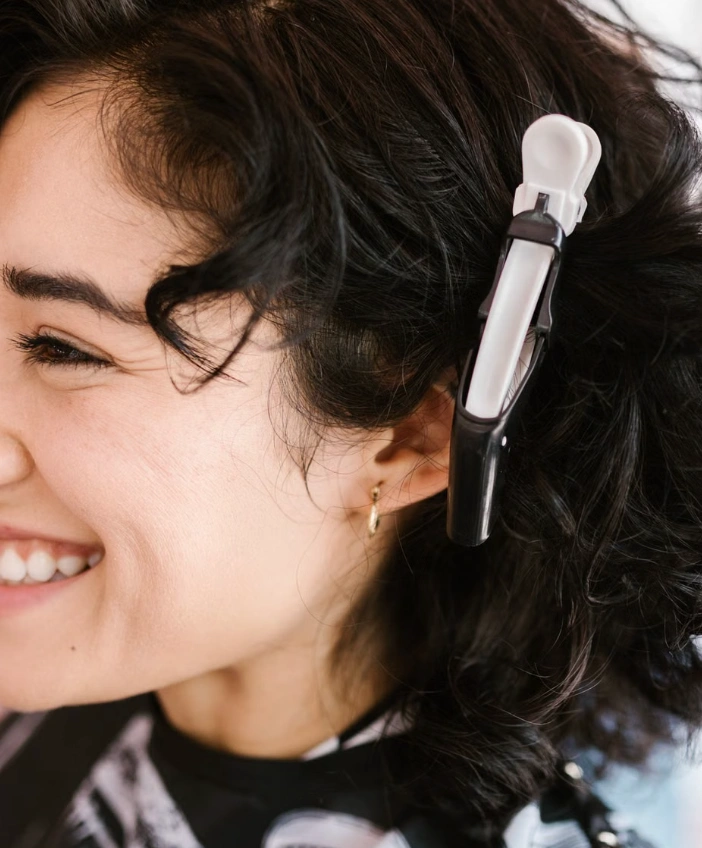
Wavy, Curly Or Coily
Curl patterns are usually grouped into type 2, 3 and 4, and most heads carry more than one. Knowing roughly where you sit tells your stylist how to cut, how much product you need and why your friend's routine does nothing for you.
-
Type 2
Wavy
Loose S shapes that fall flat at the roots and lose definition the moment they are brushed. Often mistaken for straight hair that misbehaves.
NeedsLight products, root lift and almost no heavy oil.
-
Type 3
Curly
Defined spirals and ringlets with real spring. Shine comes and goes depending on moisture, and frizz shows up first around the crown.
NeedsConsistent hydration, a gel cast and hands off while drying.
-
Type 4
Coily
Tight coils or zig zag patterns with the most shrinkage of any curl type. Naturally the driest, because oil struggles to travel down the strand.
NeedsHeavy moisture, gentle detangling and protective styling.
Very few people are one single type. It is normal to have looser curls at the front, tighter ones at the crown and something else entirely underneath, which is exactly why a curl mapped cut looks at sections rather than treating the whole head the same.
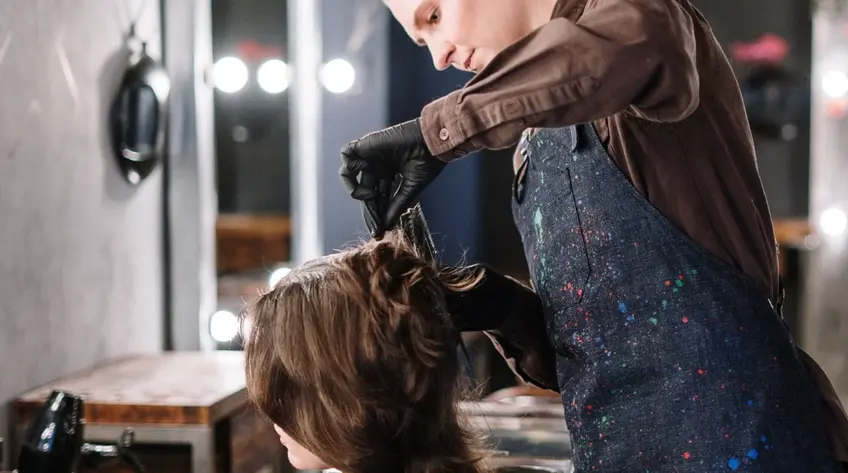
Why Curls Are Cut Differently
A cut that looks balanced wet can dry into something completely different. Curly cutting works with how hair behaves once it is dry, not how it hangs in the basin.
- Shrinkage Is Planned ForCurls can dry up to half their wet length. Length is agreed by where it will sit, not by inches removed.
- Weight Is Removed, Not LengthMost curly hair problems are weight problems. Taking bulk from the right places is what gives curls room to spring.
- Sections Follow Your Curl MapDifferent areas of your head hold different patterns, so they are cut to behave together rather than identically.
- Hydration Is Part Of The ServiceA curly cut without moisture is half a job. Dry curls will not clump however well they are cut.
Your Wash Day, In Order
Order matters more than products. Most curl problems come from doing the right things in the wrong sequence, or touching hair while it dries.
- Cleanse
- Condition
- Detangle
- Product
- Scrunch
- Dry
Wash the scalp, condition the lengths. Curls need conditioner far more than they need shampoo, so do not be shy with it.
With conditioner in, fingers or a wide tooth comb, working from the ends upwards. Dry brushing is how curls turn into frizz.
Leave in and gel go on while hair is dripping, not damp. Water is the ingredient that makes everything else work.
Squeeze upwards with hands or a microfiber towel. A cotton bath towel undoes the clump you just built.
Diffuse on low heat or air dry completely. Touching curls while they dry is the single biggest cause of frizz.
Once fully dry, scrunch out the crunchy gel cast with clean hands. Underneath it, the curls are soft and defined.
Four Curly Hair Myths
Curly hair does not need cutting often
Curls hide split ends well, which is exactly the problem. Damage travels up unnoticed until length starts snapping off. Every 8 to 12 weeks keeps shape and ends healthy.
Brushing curls makes them tidier
Brushing dry curls separates the clump and turns definition into volume and frizz. Detangle with conditioner in, while the hair is wet, and leave it alone once dry.
More oil equals more moisture
Oil seals, water hydrates. Piling oil onto dry curls locks the dryness in. Water first, then a leave in, then something to seal it, in that order.
Crunchy gel means you used too much
The cast is meant to be crunchy while it dries. It protects the curl shape from humidity. Scrunch it out once completely dry and the curls underneath are soft.
What Curly Hair Care Costs
$55Starting Price, About 60 Minutes
- Length And DensityMore hair means more sections to map, cut and check.
- Curl PatternTighter patterns take longer to work through carefully.
- ConditionVery dry or damaged curls may need treatment alongside the cut.
- Added ServicesColor or a deep treatment in the same visit is priced separately.
Want less frizz but happy to lose some curl definition? A keratin treatment loosens the pattern and cuts blow dry time. If you want to keep your curls as they are, stay here instead.
Keratin TreatmentWho Cuts Your Curls
Curly appointments are booked with the Hotscope stylist team, led by owner and educator Manny Guerrero. Ask which curl cutting approach they use when you book.



Curly Hair Questions
How Much Is Curly Hair Care At Hotscope?
Curly hair care starts from $55 and takes about 60 minutes. That covers cutting mapped to your curl pattern plus the hydration your curls need, and your stylist confirms the price at the consultation.
Do You Cut Curly Hair Wet Or Dry?
Both approaches are used across the industry, and good stylists pick based on the hair in front of them. Your stylist will tell you which they are using on your hair and why, before any cutting starts.
How Should I Arrive For A Curly Appointment?
If you can, come with your curls clean, dry and styled the way you normally wear them. Your stylist needs to see how your hair actually falls, not how it behaves straight out of a wash basin.
What Is Shrinkage?
Curly hair can look far shorter than its actual length, sometimes by half. A good curly cut is planned around your shrinkage, which is why length is discussed in how it will look, not in inches removed.
How Often Should Curly Hair Be Cut?
Usually every 8 to 12 weeks. Curls hide a lot, so shape tends to hold longer than on straight hair, but split ends travel fast on dry curl patterns.
Can I Color My Hair And Keep My Curls?
Yes. Color and curls can live together as long as condition is managed, which means bond care and moisture alongside the color rather than afterwards as an apology.
Will A Keratin Treatment Ruin My Curls?
It will loosen them, which is the point of the treatment. If you love your curl definition and only want less frizz, stay with curly hair care and skip keratin.
Why Does My Hair Frizz The Moment I Step Outside?
Dry hair pulls moisture from humid air, which lifts the cuticle and breaks up the curl clump. Hydration and a proper gel cast are what hold curls together in Gulf Coast weather.
Ready To Stop Fighting Them?
Book a curly appointment and arrive with your hair worn the way you normally wear it. Your stylist maps your pattern, cuts to it and shows you the routine that keeps it. Open Tuesday to Saturday, 10:00 AM to 6:30 PM.
